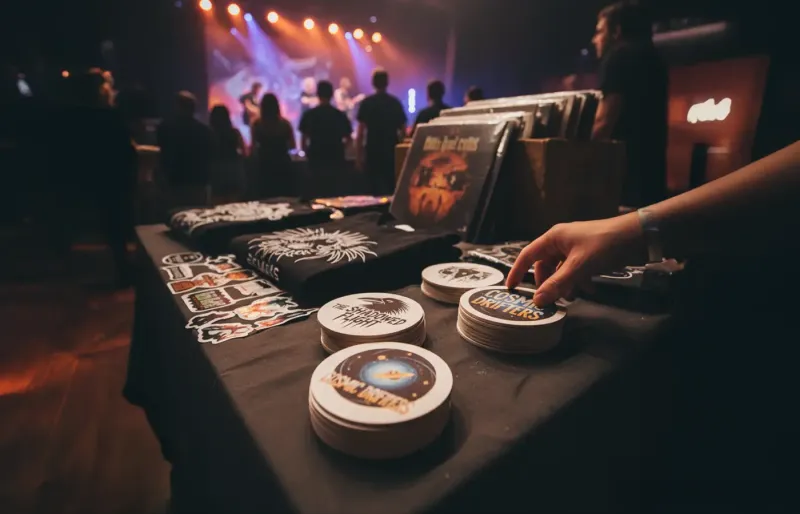
The Hoodie Math Nobody Wants to Do: What Your Merch Table Is Actually Saying About You
There's a moment every touring band knows. You're three rows deep into the crowd after the show, sweat still drying, someone taps your shoulder and asks the question that quietly determines whether you eat this month: "How much for the shirt?"
Whatever number comes out of your mouth next sends a message. Not about the shirt. About you.
The $4 Pabst Standard
Indie culture has a pricing psychology problem, and it starts with beer. We've all internalized the $4 Pabst as a moral benchmark—if the venue charges more than that, they're the enemy. So when a fan sees a $45 hoodie at the merch table, some part of their brain does the math against that anchor and comes up angry.
But here's the thing: the Pabst economics and the hoodie economics have nothing to do with each other. A venue buys beer by the keg and marks it up 400%. A band buys 50 hoodies up front—often $18-22 apiece printed, more if it's screen-printed by an actual human—guessing at sizes they'll never sell. The margin on a $45 hoodie might be $20. On a good night. On a bad night, it's the box of XXLs sitting in your trunk for two years.
Fans don't know this. Why would they? Nobody tells them.
When $45 Is Honest and When It's a Grift
Fans aren't stupid, and they've developed a pretty sharp radar for the difference between a fair price and a shakedown. From our conversations with working bands and the fan surveys floating around the DIY scene, a few patterns emerge:
Fair reads as: limited runs, designs that clearly took effort, prices consistent with what you'd pay for a comparable blank-plus-print at a local shop, and—critically—the band visibly not acting like the merch table is a toll booth.
Grift reads as: $40 for a single-color tee that looks like it was designed in five minutes, prices that jump $15 the moment a song goes viral, and the classic move of charging "tour exclusive" premiums for stuff that clearly cost the same to make as last tour's stock.
The irony is that underpricing can read as disrespect too. A $10 tee at a show where tickets were $25 tells fans you don't value your own work. Pricing psychology researchers have hammered this point for years: too cheap triggers suspicion just like too expensive triggers resentment.
The Numbers Fans Actually Live With
Survey data from indie fan communities keeps pointing to the same rough thresholds. Most show-goers budget $20-40 total for merch at a mid-size club show, with t-shirts in the $25-30 range accepted as normal almost everywhere now. Hoodies and crewnecks have a hard ceiling around $50-60—cross that and purchase intent falls off a cliff regardless of how much people love you.
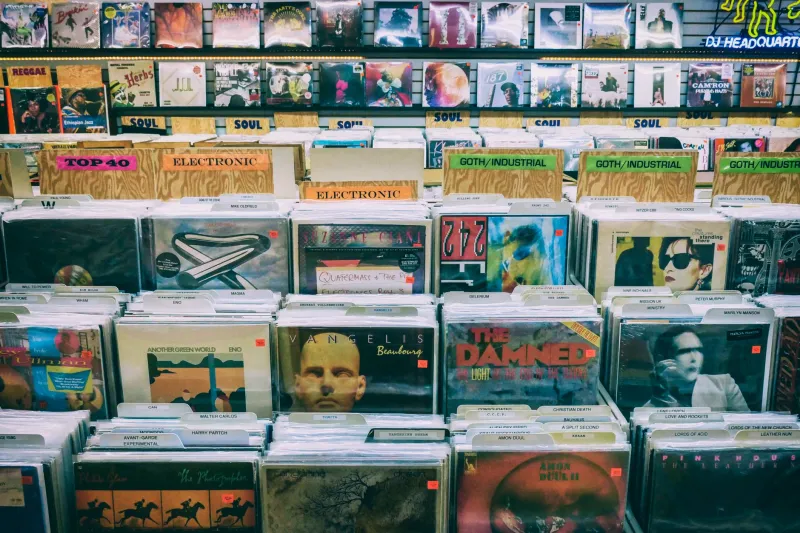
Vinyl is its own economy. Fans will grumble about a $30 LP and then buy it, because they understand vinyl manufacturing costs in a way they don't understand apparel costs. The resentment isn't really about the number. It's about not knowing what the number means.
Transparency Is the Gimmick Now
Which brings us to the most radical move an indie band can make in 2025: just saying where the money goes.
A few bands on the circuit have started printing the breakdown right on the table sign or pinning it to their Instagram before the run: "Hoodie: $22 to make, $23 to us, $23 to the van repair fund." That's it. No spreadsheet, no lecture. Just the math.
The response has been almost uniformly positive. Fans who understand the split don't just pay the price—they defend it, in comment sections, to their friends, to the guy next to them at the show muttering about corporate merch prices. Transparency converts a transaction into a stake. You're not selling a hoodie anymore; you're letting someone fund the tour.
Contrast that with the opacity most bands run: mysterious prices, vague shrugs when asked about costs, and a quiet resentment when fans balk. The fan isn't cheap for asking. You made the price a mystery.
A Pricing Playbook That Doesn't Insult Anyone
If you're a band staring at a merch spreadsheet right now, some ground rules from bands who've been through it:
- Price the shirt like a business, explain it like a friend. Charge what the math requires, then spend thirty seconds telling people why.
- Give fans a ladder. A $5 sticker and a $60 hoodie in the same table means nobody's priced out and nobody's capped out.
- Kill the surge pricing. If your merch costs more after a viral moment than it did before, fans will remember—and not fondly.
- Tell the truth about the trunk. Mention the sizes that didn't sell, the van that broke down. Specifics build trust; vibes don't.
The bands winning at this aren't the ones with the cheapest shirts. They're the ones whose fans would pay more and know exactly why they don't have to.
Respect, it turns out, isn't a price point. It's an explanation.