4 PM in an Empty Room: Why the Soundcheck Knows Your Night Before You Do
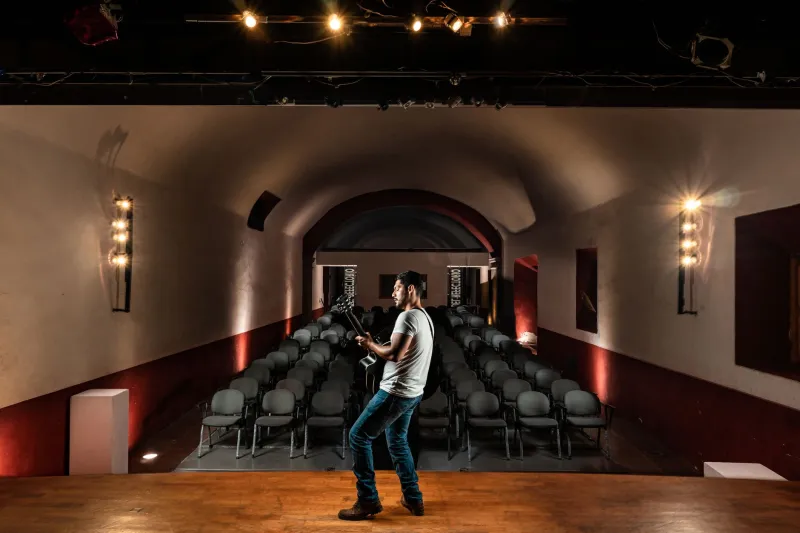
There's a version of show night that fans never see: the 4 PM version. The lights are half up, the bar staff is doing inventory, and some guy named Doug is taping cables to the floor like it's a federal operation. That version? That's where the real show starts.
We learned this the hard way somewhere around our third national run, in a basement room in Columbus where the monitors hummed at a frequency I can only describe as 'angry wasp.' We fought it all night. The set never recovered. Meanwhile, a band we toured with that leg—kids maybe two years out of high school—did something smarter during their load-in. They listened.
The Room Talks First
Every venue has a voice. Some rooms are boomy and warm, like singing in your shower. Some are dead as a DMV waiting area. Some have a weird low-end ghost that lives behind the bar no matter what the front of house does.
Soundcheck is your only chance to have a conversation with that voice before an audience shows up. Play the song you're least sure about. Not the single—the weird one, the mid-tempo one, the one with the bass line that lives in the dangerous part of the frequency spectrum. If the room can handle that song, it can handle anything. If it swallows it whole, you've just learned something crucial: tonight, you lean on the loud ones.
We've walked into rooms where our quieter material simply didn't exist acoustically. You play it, and it's like shouting into a mattress. That's not a failure—it's intel. Now you know the set order needs reshaping, and you've got two hours to do it instead of finding out in front of 200 people mid-song.
The City Leaks In Through the Walls
Here's the part nobody puts in the tour manual: soundcheck is also recon on the town itself.
You can feel a city's energy in an empty venue. In Philadelphia, our soundcheck got interrupted three times by locals wandering in early with opinions—strong ones, delivered at volume. We adjusted the set that night to be scrappier, more confrontational. Best show of the run. In Portland, the room was so mellow during load-in that our usual opener felt like a fire alarm. We swapped it for something slower and let the night build instead of detonating.
The bar staff knows things too. Seriously—ask them. 'What's the crowd usually like on a Tuesday?' is worth more than any analytics dashboard. The sound engineer is basically a local historian of that room's audiences. They know which nights get rowdy, which songs by which bands historically clear the floor, and whether the crowd stands near the stage or hides in the back like it's a school dance.
What We Actually Write Down
After enough of these, we developed a sloppy little ritual, scrawled on a setlist sheet in the greenroom:
- One song that fights the room. If it dies, cut or move it.
- One conversation with a local. Bartender, engineer, opener—anyone.
- One adjustment. Not five. One. Overcorrecting at soundcheck is how bands talk themselves out of a good night.
That last rule matters. We once watched a band in Kansas City chase their soundcheck problems for so long that they retooled their entire set and came out sounding like a cover band of themselves. The room wasn't the problem. The panic was.
Why the First Song Is Already Decided by Dinner
By the time doors open, the first three songs of your set have been quietly negotiated between the room, the city, and your gut. Maybe the bass was fighting you all afternoon, so you open with the guitar-driven one. Maybe the energy in the empty hall was jittery, so you skip the slow build and hit the ground running.
Audiences think the show starts when the lights drop. It doesn't. It started hours ago, when a drummer hit a snare in an empty room and somebody said, 'Huh. That's different.'
So if you're in a young band wondering why some nights feel fated from the first chord—this is why. The soundcheck is the show. The rest is just doing it in front of people.
And if you ever find yourself in that basement in Columbus: bring your own monitor mix, and maybe a priest.