Spoiler Season: How to Keep Your Live Show Alive When the Internet Already Knows Your Setlist
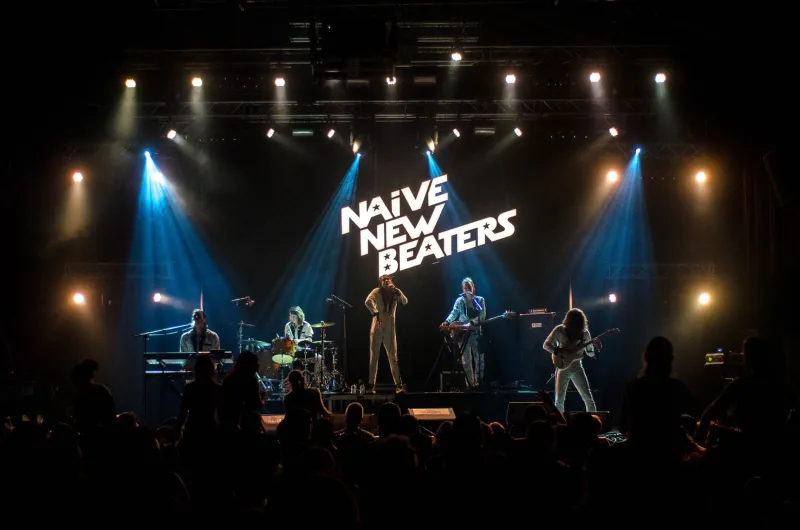
There's a particular kind of deflation that happens when you walk into a venue already knowing exactly what's coming. You've seen the fan photos from three cities back. You know the opener, the closer, the two-song encore. By the time the lights drop, you're not anticipating — you're just confirming.
This is the world touring bands live in now. And honestly? It's nobody's fault. Fans are excited. They want to share that excitement. But the side effect is a slow erosion of one of live music's most powerful ingredients: not knowing what happens next.
So the question isn't how to stop the leaks. That ship has sailed. The real question is what you do about it.
The Leak Is the New Normal
Setlist.fm has been around since 2002. That's not new. What's new is the speed and reach. A fan in Denver posts a setlist photo at 10:47 PM, and by midnight, fans in Nashville, Portland, and Boston have already built their expectations around it. Social media didn't create the spoiler problem — it just turbocharged it.
For most touring bands, the setlist stays pretty locked once a run gets going. There are good reasons for that: rehearsals are built around specific transitions, lighting cues are programmed, the crew knows the flow. Changing things up mid-tour is a real logistical ask. But the cost of not changing things up is a show that feels like a greatest-hits confirmation rather than an event.
And audiences can feel that difference. There's a flatness to a show when everyone already knows the shape of it.
What Actually Creates a Moment
Here's the thing about live music that streaming will never replicate: it's inherently unstable. Anything can happen. The amp cuts out. The singer forgets a lyric and laughs about it. Someone in the front row starts crying during a song you thought nobody really connected with. Those moments aren't scripted — they're the whole point.
Surprise works the same way. When a band breaks from the expected pattern, the room shifts. People lean in. Phones drop. That collective alertness is exactly what makes a show feel like something worth remembering.
So the counterweapon to spoiler culture isn't secrecy — it's unpredictability built into the structure of the show itself.
Bands Who Got This Right
Phish has been doing rotating setlists for decades, and their fanbase essentially treats the unpredictability as the main attraction. You don't go to a Phish show to hear specific songs — you go because you genuinely don't know what version of those songs you're going to get, or whether they'll even play what you expected. That model won't work for every act, but the underlying logic is sound.
On a more grounded level, Paramore started weaving in acoustic rearrangements of older tracks during their After Laughter touring cycle. Fans who'd seen the setlist online still got caught off guard by hearing a song they knew presented in a completely different way. The familiarity of the title didn't prepare them for the experience of the performance.
Billie Eilish has been known to swap out songs between legs of a tour specifically to keep the show feeling fresh — both for audiences and for herself. She's talked openly about how performing the same set every night wears on her mentally, which is a whole separate but connected issue.
Deep cuts are another powerful tool here. If fans have memorized your setlist through social media, pull something from the catalog that almost nobody expected. Something from an early EP, a B-side, a cover you haven't played in years. The people who know it will absolutely lose their minds. The people who don't know it yet will feel like they're discovering something in real time. Both reactions are gold.
Building the Unpredictable Into Your Run
This doesn't have to mean chaos. You can build structured flexibility into a setlist. Think of it like a menu with a few fixed anchors — your opener, your closer, maybe two or three songs that are locked because of production cues — and then a middle section that rotates. Even swapping three or four songs per show creates enough variation that the leaked setlist from Tuesday doesn't fully spoil Thursday.
Some bands designate a "wildcard slot" — one moment in the show where literally anything could happen. A surprise guest, an unreleased song, an acoustic version of a track that's never been performed that way live. You don't announce it. You don't hint at it. You just leave the door open and walk through it when it feels right.
The trick is making sure your crew is prepped for the variability. If your lighting director only knows one version of the show, improvisation becomes a liability. But if you've rehearsed a few different configurations, flexibility becomes a superpower.
The Psychological Shift for Artists
There's also something worth saying about what this demands from the people on stage. Performing the same set every night for six weeks is already a mental marathon. Knowing that audiences have pre-digested the show before they walk in can make it feel even more mechanical — like you're executing a blueprint rather than playing music.
Giving yourself permission to change things up isn't just a strategy for audiences. It's a way of keeping yourself honest and present. When you don't know exactly what's coming next, you have to actually listen to the room. You have to make real decisions in real time. That's when performance stops being repetition and starts being music again.
And here's the quiet truth: fans can feel that too. They can tell the difference between a band going through the motions and a band that's genuinely in it. Spoilers can't replicate presence. They can tell you what songs are coming — they can't tell you what the room is going to feel like when those songs land.
Raw Sound Doesn't Leak
At the end of the day, what can't be spoiled is the actual experience of being in the room. The volume. The sweat. The way a chord hits your chest from ten feet away from a speaker stack. No setlist screenshot captures that.
But artists who treat the setlist as a living document — something that breathes and shifts across a tour — are doing something smart. They're acknowledging the reality of spoiler culture without surrendering to it. They're saying: sure, you know the song titles. But you don't know what tonight looks like yet.
That's still a promise worth showing up for.