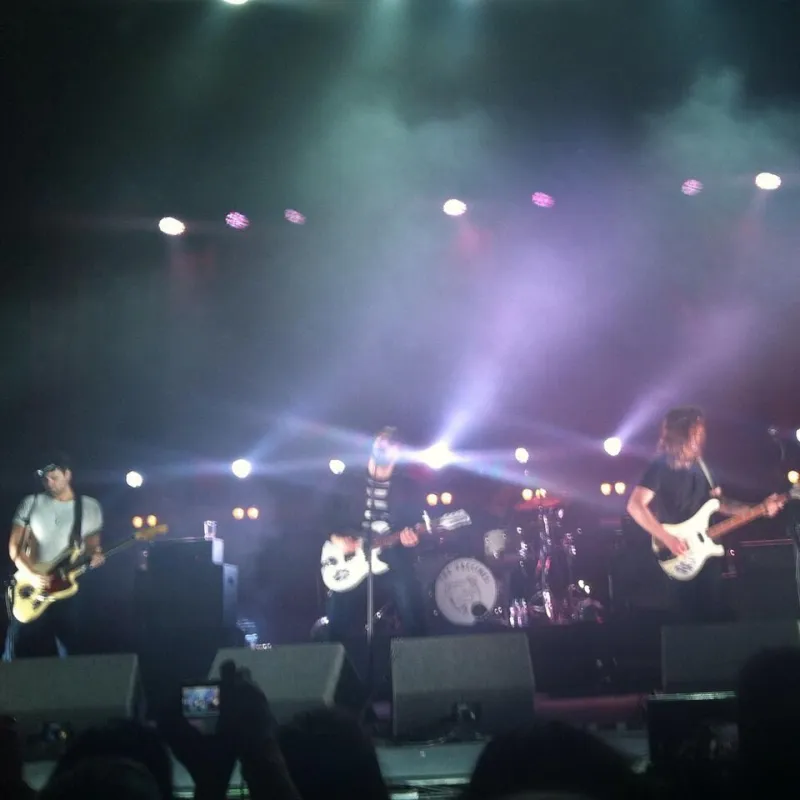
Sticky Floors and Bad Monitors: A Love Letter to the Venues That Almost Broke Us
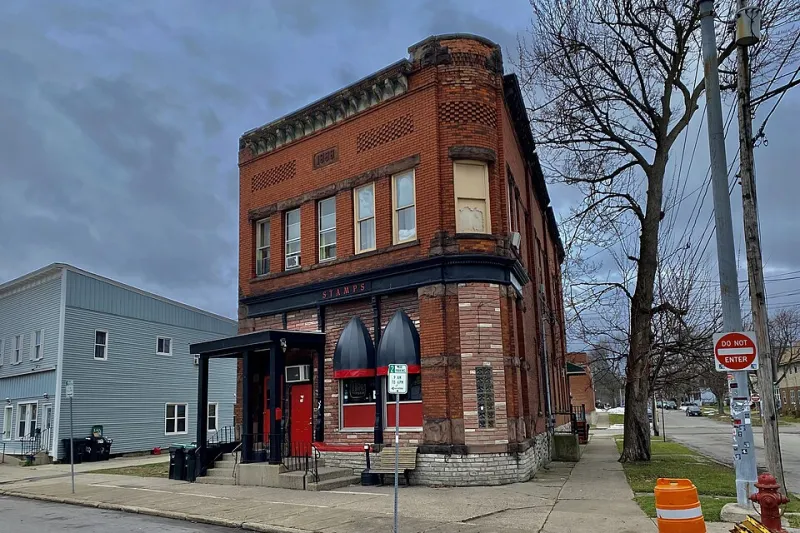
Photo: Andre Carrotflower, CC BY-SA 4.0, via Wikimedia Commons
The Night the Monitor Caught Fire (A Little)
It didn't fully ignite. That's important to clarify. There was smoke, and there was a smell that you'd describe as "electrical ambitions meeting their limit," and the sound tech—a guy named Dale who also ran the door and was apparently the owner's cousin—looked at it, looked at us, and said, "She'll be fine if you just don't use the low end."
We played the show. It was genuinely one of the best nights of that run.
If you've spent any real time on the road, you know exactly what we're talking about. The venues that exist in a permanent state of structural optimism. The ones where the green room is a bathroom with a folding chair in it. The ones where the stage lighting consists of two par cans and a string of Christmas lights that someone's been meaning to take down since January. These places are everywhere, and somehow—inexplicably, stubbornly—they keep producing unforgettable shows.
Why Bad Rooms Make Great Shows
There's a theory worth considering: the worse the room, the more everyone has to commit.
When you're playing a venue with a flawless sound system, perfect sightlines, and a crowd that showed up specifically because they bought tickets two weeks in advance, there's a net of professionalism holding everything up. That's not a bad thing. But it can create a certain kind of distance. The show is an event. It has production value. People are experiencing it.
When you're playing a dive bar in a strip mall off a state highway and the kick drum sounds like someone dropping a textbook in a closet, something different happens. You stop relying on the room and start relying on each other. You play louder, or harder, or you lean into the absurdity. The crowd—usually thirty to fifty people who wandered in because there was literally nothing else happening—picks up on that energy and matches it. There's no barrier. You're all just in this together.
Some of the most connected shows in any band's history happen in rooms that should have been condemned.
The Practical Reality (Because Someone Has to Say It)
Okay. Romanticizing bad venues is fun, but there are actual survival skills involved. Let's be real about some of them.
Do a real soundcheck, even if it seems pointless. Especially if the PA looks like it was last serviced during the Bush administration. You need to know where the feedback frequencies are before the show, not during the second song when half the crowd has their fingers in their ears. Even a ten-minute line check tells you what you're working with.
Bring your own direct boxes and cables. This sounds like overkill until the fourth time a house DI blows out mid-set. A small gear bag with backups for the things that fail most often—cables, DIs, a spare set of strings—is the difference between a problem and a story.
Talk to the sound person like a human being. This one's underrated. The person running sound at a venue that pays them $50 a night has heard a lot of bands treat them like furniture. Being genuinely decent to them, asking what they need from you, and not demanding things the room can't deliver will get you further than a rider ever will. Dale, the guy with the smoking monitor? He stayed two hours after close to help us load out in the rain because we'd been cool with him all night.
Lower the stage volume. Counterintuitive in a loud room, but critical. The more you're fighting your own stage volume, the worse the front-of-house mix gets, and the more the crowd has to strain to hear anything. Pull the amps back, trust the PA (even the sketchy one), and let the sound person do their job.
The Mythology of the Terrible Venue
Here's what nobody tells you when you start touring: the shows that become stories are almost never the ones that went perfectly.
Fans who were there for a technically flawless performance at a mid-sized club remember it fondly. Fans who were there the night the power went out and the band finished the set acoustically, standing on the bar, while someone held up their phone flashlight—those fans are still talking about it a decade later. They bring it up unprompted. They've told the story to people who've never even heard of you, and those people became curious.
The rough-around-the-edges shows create mythology in a way that polished ones simply can't. They're proof that the music exists outside of ideal conditions. That it's real.
What These Places Actually Teach You
Every musician who's come up through the DIY circuit will tell you the same thing if you ask them honestly: the terrible venues taught them more than the good ones did. They taught adaptability. They taught humility. They taught you how to read a room, how to communicate with your bandmates through a look when something's going wrong, how to make a crowd feel something even when every technical element is working against you.
Those are skills that don't come from gear or production budgets. They come from playing the sticky-floored bar in Akron on a Tuesday when twelve people showed up and the monitor was on fire (a little).
So yeah. Here's to those rooms. They're still out there, and they're still doing more for live music than they'll ever get credit for.